Special protection against termination may prohibit termination, require prior approval from a government agency, or ensure additional participation rights. It applies, among others, to pregnant women, employees on parental or caregiving leave, individuals with severe disabilities or those deemed equivalent, and certain key personnel within a company. Nevertheless, those affected must not simply ignore a termination notice: the conditions for protection and applicable deadlines must be reviewed immediately.
This special protection is linked either to a personal situation or to a legally protected role within the company. It does not prevent termination in all cases. The decisive factors are which rules apply to the specific protected group and whether the prescribed procedure was followed.
1. What does “special protection against termination” mean?
To the extent that general protection against termination applies, a termination must be socially justified. Special protection against termination imposes additional restrictions: Before terminating an employee, the employer often needs approval from a government agency or must follow a specific procedure. In some cases, termination is generally prohibited during a specific period.
It is crucial to note that special protection against termination, official approval, and the deadline for filing a lawsuit are three distinct issues. An official authority may approve a termination while other objections under employment law remain valid. Conversely, notification of pregnancy or a severe disability does not automatically preserve the deadline for filing a lawsuit.
This puts those affected in a significantly stronger position. For employers, termination then becomes more challenging both legally and organizationally. For employees, however, this does not mean they can simply ignore a termination letter. Even in an employment relationship with special protections, short deadlines may still apply.
2. Which employees are specially protected?
2.1 Pregnant employees and employees on parental leave
In principle, employers may not terminate an employee’s employment during pregnancy. This protection extends beyond childbirth ( Section 17 of the Maternity Protection Act (MuSchG)). During parental leave, a separate prohibition on termination applies ( Section 18 of the Parental Leave Act (BEEG)).
It is not only decisive whether the employer was already aware of the pregnancy when the notice of termination was received. The employee may, in principle, still inform the employer within two weeks of receiving the notice. If she has exceeded this deadline for a reason beyond her control, she must make up for the notification without delay. This notification to the employer does not replace a lawsuit for protection against wrongful termination.
In practice, communication and deadlines are particularly crucial here. Anyone who receives a notice of termination and is pregnant or suspects she is pregnant should therefore seek legal advice immediately. Parents on parental leave should also not assume that every termination is automatically invalid—but should have their specific situation reviewed.
2.2 People with Severe Disabilities and Those Treated as Such
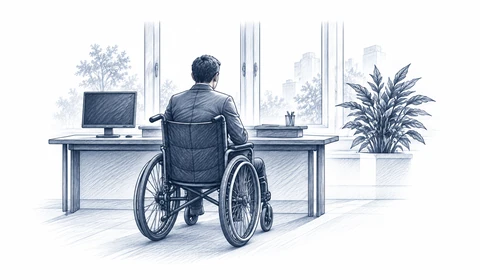
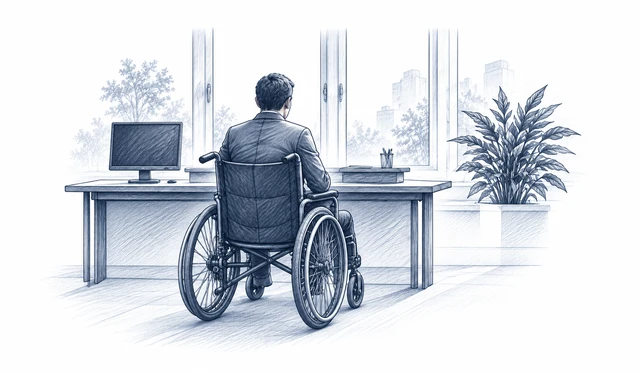
For employees with severe disabilities (a disability rating of 50 or higher), the employer generally requires the consent of the Integration Office before terminating employment ( Section 168 of SGB IX). Exceptions to this rule include, in particular, employment relationships that have existed for no longer than six months without interruption at the time the notice of termination is received ( Section 173(1)(1) of SGB IX). If the required consent is lacking, the termination is generally invalid.
This protection generally also applies to individuals with a degree of disability of at least 30 and less than 50 who are deemed equivalent to severely disabled persons by the Federal Employment Agency. Whether such equivalence has already been granted or an application is still pending—and what the employer knows about this—is important for the legal assessment.
If the employer is not yet aware of an existing severe disability, the affected person should inform the employer of this immediately following termination. The Federal Labor Court (BAG) sets the reasonable notice period at three weeks from receipt; a standard transmission time is added to this. One should not rely on a mere mention in a complaint that is served only later (BAG, judgment of September 22, 2016 – 2 AZR 700/15).
2.3 Works Council Members and Other Company Officials
Members of the works council represent the interests of the workforce vis-à-vis the employer. To ensure that this office can be exercised independently, they enjoy special protection. Ordinary termination is generally prohibited during their term of office ( Section 15(1) of the German Employment Protection Act (KSchG)). Extraordinary termination generally requires the consent of the works council; if the works council refuses to give its consent, the employer may apply to the court to have the works council’s refusal set aside ( Section 103 of the German Works Constitution Act (BetrVG)).
A mere breach of official duties is not sufficient grounds for terminating a works council member. The conduct in question must also constitute a breach of an obligation under the employment contract ( Federal Labor Court [BAG], judgment of May 12, 2010 – 2 AZR 587/08). This is distinct from the general requirement to consult with the relevant works council prior to termination.
This protection may also extend to other company representatives, such as members of the youth and apprentice representative body, election committees, or election candidates. The exact scope depends on the role the person in question holds within the company and when certain statements or nominations were made.
2.4 Trainees After the Probationary Period
Trainees are afforded special protection after the probationary period ends. The training company may then terminate the training agreement without notice only for good cause. The termination must be in writing and must state the reasons.
2.5 Care Leave and Family Care Leave
Anyone who cares for close relatives and takes care leave or family care leave for this purpose may also enjoy special protection against termination. This protection generally begins upon notification, but no earlier than twelve weeks before the announced start date. In the case of certain voluntarily agreed- upon leaves of absence, it begins only when the leave of absence commences. Therefore, the specific basis for the leave and the notification to the employer should be documented in a clear and verifiable manner.
3. When Termination May Be Possible Despite Special Protection
Special protection against termination does not mean that any termination of the employment relationship is ruled out. Exceptions may apply, in particular, in the following cases:
- Business Closure: If a business is completely shut down, a statutory exception or an official declaration of admissibility may apply, depending on the protection group; however, this does not automatically make the termination permissible.
- Serious breaches of duty: Significant misconduct may, after reviewing all circumstances and weighing the interests involved, constitute good cause for extraordinary termination. Any additional required approvals remain unaffected by this.
In the case of the termination of employees with severe disabilities or those deemed equivalent, the Integration Office is responsible for granting the required approval. In Berlin, this task is carried out by the Inclusion Office at LAGeSo. It examines, in particular, the connection between the reason for termination and the disability, as well as possibilities for retaining the job. If its approval is required, it must generally be obtained before the termination is issued.
If there is a designated representative for employees with severe disabilities, they must be duly consulted before the decision to terminate employment is made. This is a separate obligation in addition to any approval procedure that may be required by the Integration Office.
Dismissal of pregnant employees is also only possible in exceptional cases. The employer must first obtain a declaration of admissibility from the competent occupational safety and health authority. In Berlin, this is the LAGetSi, which provides information and application forms for this purpose.
High barriers also apply to employees on parental or caregiving leave.
However, official approval does not in itself mean that the termination is valid overall. An action for protection against wrongful termination may be filed against the termination subsequently issued. The labor court independently reviews whether there is a sufficient ground for termination under employment law, whether the termination was formally issued in accordance with the rules, and whether all other requirements have been met. The official decision itself may also be reviewed separately in administrative proceedings.
In the case of termination due to illness, for example, approval from the Integration Office does not mean that a workplace integration program could not have preserved the job anyway. The Federal Labor Court (BAG) clarified this in its ruling of December 15, 2022 – 2 AZR 162/22.
4. What You Should Do Now
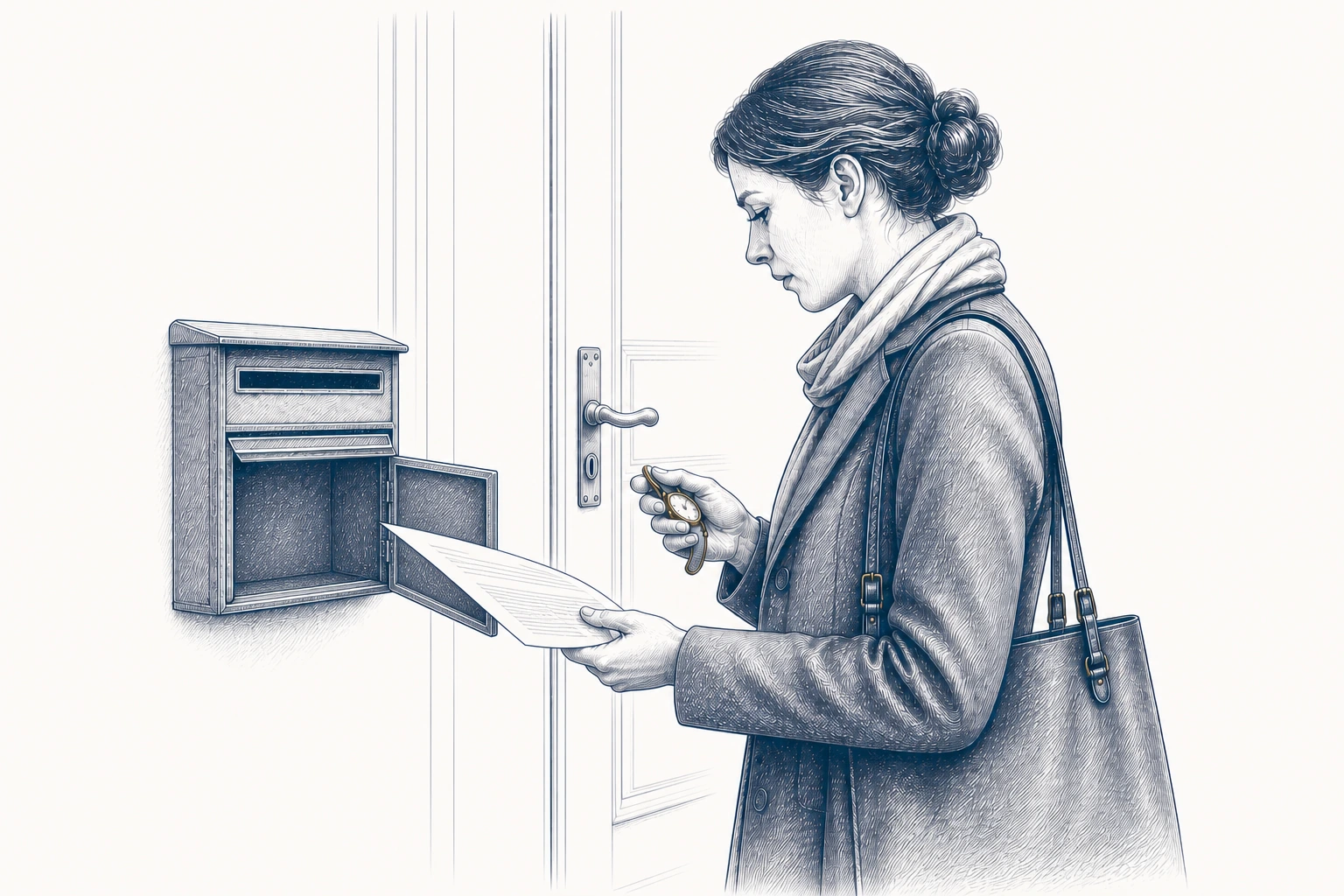
Anyone wishing to challenge a written termination must, as a general rule, file a claim for protection against dismissal with the labor court within three weeks of receiving the notice ( § 4, sentence 1, KSchG). If this deadline is missed, a termination that would otherwise be invalid may nevertheless become effective. For terminations requiring official approval, the same provision contains a special rule regarding the start of the deadline. Do not assume, without verifying the facts, that the deadline has not yet begun to run for this reason.
If the employer was unaware of the pregnancy at the time the notice of termination was received, the three-week filing period generally begins upon receipt of the letter. This also applies if the employee herself was initially unaware of her pregnancy ( Federal Labor Court [BAG], judgment of April 3, 2025 – 2 AZR 156/24).
If, for reasons beyond her control, the employee only learns after the filing deadline has expired that she was already pregnant when the notice of termination was received, retroactive admission of the lawsuit may be considered. The application must generally be filed within two weeks after the obstacle has been removed ( Section 5(1) and (3) of the German Employment Protection Act (KSchG)). According to the aforementioned BAG decision, the decisive factor here is knowledge that the pregnancy already existed at the time the notice of termination was received; this issue may be particularly critical in cases where a doctor’s appointment was not possible until later.
Practical Tip: Create a brief timeline: When was the notice of termination received, when did the grounds for protection arise, and when were they communicated to the employer? Keep the termination letter, the envelope, proof of status or parental leave, and official correspondence together. In cases where a pregnancy is discovered later, the first positive test result, the appointment confirmation, and the medical confirmation should also be included in this timeline.
5. Conclusion
Special protection against termination can prevent a termination, make it more difficult, or require a specific procedure. It does not automatically entitle you to severance pay. It is crucial to immediately review the eligibility requirements and all deadlines and to challenge the termination in court in a timely manner.
6. FAQs
6.1 Who is entitled to special protection against termination?
The following groups, among others, are specially protected:
- Pregnant women
- Employees on parental or caregiving leave
- People with severe disabilities or those deemed equivalent
- Works council members and other company representatives
- Apprentices after the probationary period
6.2 Can I be terminated despite having special protection against termination?
Yes, but only under strict conditions. Often, the employer must first obtain approval from a competent authority or agency.
6.3 Do I have to file a lawsuit against a termination that is obviously invalid?
Anyone wishing to challenge a written termination must generally file a lawsuit within three weeks of receiving it. This applies even in cases of seemingly clear errors. Special circumstances may apply if official approval is required or if a pregnancy is discovered later; the deadline should be checked immediately.
6.4 Do I automatically receive an amount of severance pay because of special protection against termination?
No. Even special protection against termination generally does not automatically entitle you to severance pay. However, this special protection often strengthens your negotiating position if the employer still wishes to terminate the employment relationship. Whether a mutually agreed-upon termination and severance pay are achievable depends on the legal risks and the specific circumstances of the negotiation.
6.5 Does special protection against termination also apply during the probationary period?
Partially, yes. For pregnant employees, the prohibition on termination generally applies even during the probationary period. For employees with severe disabilities or those treated as such, however, the special protection requiring consent generally applies only once the employment relationship has continued uninterrupted for more than six months. Other protective provisions may apply even before that. A distinction must be made between the agreed-upon probationary period and this statutory waiting period.
An existing, authorized representative for employees with severe disabilities must also be duly consulted prior to a termination during the notice period. In doing so, the representative must be provided with sufficient information and given the opportunity to comment ( Federal Labor Court [BAG], judgment of January 29, 2026 – 2 AZR 128/25).
If you have received a notice of termination and are eligible for special protection, Marten & Graner can review the eligibility requirements, deadlines, and next steps based on your documents.
7. Key Legal Provisions for Reference
- § 1 KSchG – Socially Unjustified Terminations
- § 23 KSchG – Scope of Application to the Workplace
- § 4 KSchG – Statute of limitations and special commencement of the statute of limitations
- § 5 KSchG – Subsequent Admission of Late Lawsuits
- § 7 KSchG – Effectiveness in the Event of a Missed Deadline
- § 15 KSchG – Protection of Company Officials
- § 17 MuSchG – Prohibition on Termination
- § 18 BEEG – Protection Against Dismissal During Parental Leave
- § 2 SGB IX – Severe Disability and Equal Treatment
- § 151 SGB IX – Equal Treatment by the Federal Employment Agency
- § 168 SGB IX – Prior Approval by the Integration Office
- § 173 SGB IX – Exceptions to the Protection Against Dismissal
- § 178(2) SGB IX – Participation of the Representative Body for Persons with Severe Disabilities
- § 102 BetrVG – Consultation with the Works Council
- § 103 BetrVG – Consent to Extraordinary Termination
- § 22 BBiG – Termination of a Vocational Training
- Agreement § 5 PflegeZG – Protection Against Termination During Caregiving Leave
- Section 2(3) of the Family Care Leave Act (FPfZG) – Protection during family care leave
- § 626 BGB – Extraordinary Termination for Good Cause
8. Case law for reference
Footnote 1 – Federal Labor Court (BAG), Judgment of September 22, 2016 – 2 AZR 700/15 – If the employer is unaware of a severe disability, prompt notification is required. The reasonable notice period is based on three weeks from receipt plus the usual transmission time; there is no blanket extension of the statute of limitations.
Footnote 2 – Federal Labor Court (BAG), Judgment of May 12, 2010 – 2 AZR 587/08 – A mere breach of official duties under works constitution law is not sufficient grounds for termination. There must also be a breach of obligations under the employment contract.
Footnote 3 – Federal Labor Court (BAG), Judgment of December 15, 2022 – 2 AZR 162/22 – The approval of the Integration Office does not give rise to a presumption that a workplace integration management program could not have prevented the termination due to illness. Labor courts review the termination independently.
Fn. 4 – Federal Labor Court (BAG), Judgment of April 3, 2025 – 2 AZR 156/24 – If the employer is unaware of the pregnancy, the three-week period generally begins upon receipt of notice. If the employer becomes aware of the pregnancy—which already existed at the time of receipt—later through no fault of their own, retroactive approval may be considered; the start of the period for such approval depends on when the obstacle is removed.
Fn. 5 – Federal Labor Court (BAG), Judgment of January 29, 2026 – 2 AZR 128/25 – Termination during the probationary period also requires proper involvement of the representative for employees with severe disabilities. Sufficient information and an opportunity to comment are required.
9. Government Agencies in Berlin
- Inclusion Office at the LAGeSo – Protection Against Dismissal and Prevention– Berlin contact points and approval procedures for the termination of employees with severe disabilities or those deemed equivalent.
- LAGetSi – Declaration of Admissibility of a Termination– Information on filing applications in Berlin for special protection under maternity leave, parental leave, and family care leave laws; an administrative decision does not replace a lawsuit in labor court.
Read more on this topic
Your next question