
An employment contract is the foundation of every successful employment relationship. It governs the rights, obligations, and mutual expectations between employers and employees. Nevertheless, its importance is often underestimated—or the contract is drafted under time pressure, with potentially far- reaching legal consequences.
In this article, you’ll learn why it makes sense to have an employment contract professionally drafted, what content is essential, and how to avoid legal risks. We’ll also provide practical tips on drafting contracts and answer frequently asked questions from our experience advising on employment law .
Why You Should Have an Employment Contract Drafted
A carefully drafted employment contract protects both parties—employers and employees alike.
For you as an employer, this means: You establish clarity regarding mutual rights and obligations, avoid future disputes, and strengthen your position in the event of employment law disputes.
An unclear, flawed, or incomplete contract, on the other hand, can pose significant risks: ranging from claims challenging a dismissal and invalid fixed-term contracts to costly back pay or claims for damages.
Having an employment contract professionally drafted—for example, by certified specialist lawyers in employment law—ensures that individual agreements are implemented in compliance with the law.
This applies, among other things, to:
- Flexible work schedules Work-from-
- home policies and remote work
- Bonus or performance agreements
- Statutes of limitations and contractual penalties
- Non-compete clauses and confidentiality obligations
A well-thought-out contract is not only a legal requirement but also a reflection of your professionalism as an employer.
Read more about amending employment contracts in this article.
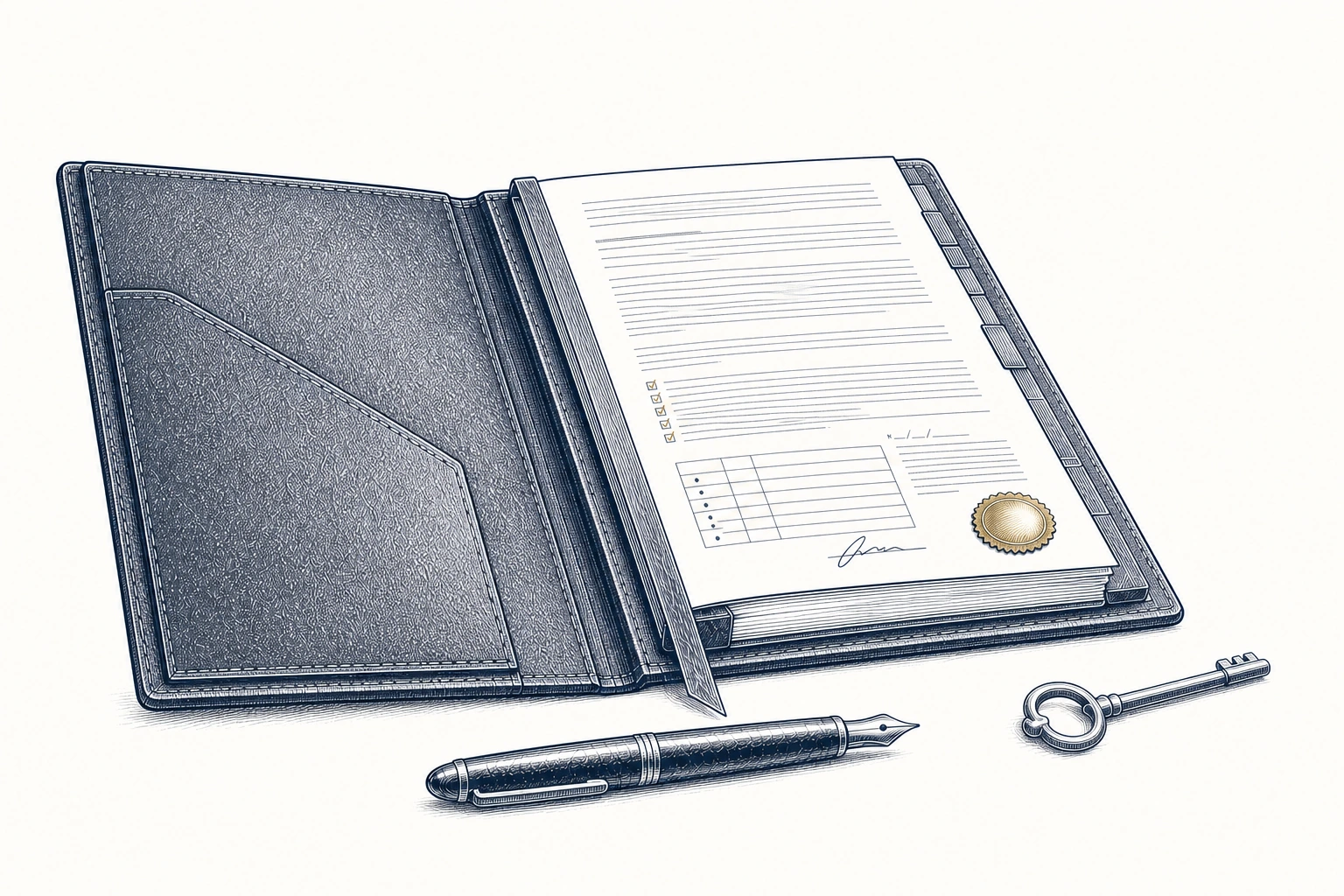
Contents of an Employment Contract: What You Need to Consider
An employment contract should clearly and legally address all essential points to avoid future misunderstandings or disputes. In addition to legal precision, it is also crucial that the contract’s content be practical and realistic.
Overview of Key Provisions
The basic components include the full names of the contracting parties and the start date of the employment relationship. A job description that is as specific as possible and the specification of the work location—including mobile or rotating work locations, if applicable—provide clarity regarding the work to be performed.
Compensation must also be clearly defined, including any additional benefits such as Christmas bonuses or vacation pay. The same applies to working hours, break policies, overtime, and vacation entitlement. Whether flex time or trust-based working hours are agreed upon should also be specified.
Notice periods and termination procedures must also be included in the contract—ideally with provisions regarding the form of termination, possible leave of absence, or severance pay.
Additional clauses, such as confidentiality agreements or non-compete clauses, may be useful, as may provisions for special situations such as parental leave or extended periods of illness.
Unclear or contradictory wording often leads to legal disadvantages. Therefore, it is advisable to have employment contracts professionally drafted or reviewed—to ensure legally sound and fair solutions that stand up to the test of everyday life.
Common Challenges in Drafting Employment Contracts
- Retroactive contract drafting: A written employment contract can be drafted even after the employment relationship has begun—for example, in the case of a short-notice hire. It is crucial that the essential terms have already been agreed upon and documented beforehand.
- Verbal employment contracts: While these are generally valid (§ 105 GewO ),they carry significant risks. In the event of a dispute, it is often unclear what was actually agreed upon—particularly regarding issues such as probationary periods, compensation, or fixed-term contracts. Written contracts provide certainty of evidence.
- Costs and Duration: Drafting a legally sound employment contract usually takes only a few hours once the parties have clearly agreed on what needs to be regulated, provided the initial situation is straightforward. In more complex cases—such as bonus schemes, working time accounts, or international assignments—the effort involved may be greater.
Real-life example: An employer hired a new employee on short notice—initially without a written contract. Two weeks later, she had the employment contract professionally drafted. Since the terms agreed upon verbally were clearly documented, a legally sound contract could be drawn up retroactively, thereby avoiding conflicts.
Important Information for Employers
A legally sound employment contract is not only required by law ( Section 2 of the German Employment Contract Documentation Act (NachwG)), but is also a key means of protecting one’s own business. Employers should therefore take special care to ensure that all contractual agreements—such as those regarding working hours, compensation, vacation, secondary employment, or continuing education—are formulated clearly and unambiguously. This is because imprecise or ambiguous clauses often lead to questions of interpretation and can result in legal disadvantages in the event of a dispute.
Individual provisions such as working from home, variable compensation models, overtime regulations, or performance agreements can also be legally validly incorporated into employment contracts— provided they are transparent and legally sound. Vague wording or unclear terms should be avoided at all costs.
Legal certainty begins with clear contracts
Existing employment contracts should be reviewed regularly and adapted to new legal requirements as well as internal company developments. In particular, changes resulting from the German Employment Evidence Act (Nachweisgesetz), regulations regarding parental leave or the right to part-time work, as well as organizational changes such as the introduction of remote work, require legal updates.
Contractual changes—such as those regarding salary, position, or place of work—should always be agreed upon in writing and signed by both parties ( Section 305b of the German Civil Code (BGB)). Verbal side agreements are not only legally uncertain but also difficult to substantiate retrospectively.
Taking these points into account not only strengthens one’s own legal position but also creates a transparent and fair foundation for a stable, long-term employment relationship—both for new hires and for existing employment relationships.
Another particular challenge is that case law almost regularly declares certain contract clauses to be legally invalid in light of developments in existing case law and new legislation. In such cases, employment contracts must also be amended.
Advice on Drafting Your Employment Contract
The four-member legal team at Marten & Graner includes three certified specialist lawyers in employment law. We review the contract terms and tailor the drafting to your specific situation.
Conclusion and Recommendations
A professionally drafted employment contract is far more than a formality—it protects your company from legal risks, provides clarity, and strengthens the foundation of the working relationship.
Key points at a glance:
- Employment contracts should be legally reviewed and tailored to each individual.
- Clear provisions regarding compensation, working hours, vacation, and termination help prevent conflicts.
- It is also possible to draft an employment contract retroactively, but this should be done professionally.
- Verbal agreements are possible but offer little security.
- Certified specialist lawyers in employment law can assist with adapting, updating, and drafting contracts.
FAQ: The Most Important Questions About Having an Employment Contract Drafted
How long does it take to draft an employment contract?
Usually a few hours, depending on the complexity and individual requirements.
Can I have an employment contract drafted retroactively?
Yes. It is important and recommended that the contract be put in writing and signed by both parties.
Who is authorized to sign employment contracts?
Typically, company executives, authorized employees, or HR managers.
Is a verbal employment contract valid?
In principle, yes, but it creates a high risk of conflict. Written contracts provide legal certainty.
What is not allowed in an employment contract?
Prohibited clauses that violate applicable law or collective bargaining agreements, such as discriminatory provisions, unfair termination provisions, or unreasonable contractual penalties, as well as any provisions that fall below statutory minimum standards.
Who drafts employment contracts?
Certified specialist lawyers in employment law, in-house HR departments, or specialized service providers. A certified specialist lawyer in employment law can review the legal requirements on a case-by-case basis.
Can you sign an employment contract online?
Yes, electronic signatures are legally valid provided the requirements of the eIDAS Regulation are met.